Tuesday, July 25, 2023

American Prometheus

 We don’t go to many movies, but we will go to “Oppenheimer.” I’m wading through AMERICAN PROMETHEUS now but will not have it read by Thursday when we plan to go.  Born in 1942, I don’t remember that first bomb explosion, but there was a spate of atomic tests I do remember as I grew older. I’ll probably have something to say about it on Friday. 


Monday, July 24, 2023

The GRHS 52nd Annual Int'l Convention

 July 19-22, 2023, Mandan, ND


All ethnic groups must have gone through difficulties at one time or another during their historical existence. That is certainly true of the Germans from Russia  who have formed themselves into an organization to keep memories. One of the sessions I attended revealed to me a powerful story that centered on a fellow who’d stepped on my foot the day before. The discussion turned to the Displaced Persons Act signed by President Truman in 1948. The man was included in that category and as a young boy participated in one of the long treks to reach safety and thus was able to come to the United States under that act. I asked him later if he remembered much of it and he replied, “I remember everything.” Then, stupidly, I asked how many days did it take. He answered somewhat irritatedly, “Days? Weeks! Months!” 


The author Mark Sullivan has written a book, THE LAST GREEN VALLEY, that tells the story of that family’s flight from the advancing Russian army and the unknown future it would bring as World War II drew to a close. I was reminded of a veterinarian in Enderlin who was a DP. The young boy I was can still hear him telling Dad in his heavily accented voice to pronounce his name Ma-hi-look.


On the day before the convention we took advantage of the opportunity to do a bus tour Fort Yates with several points between. There are only a half dozen four star admirals in our navy and before we departed one of them came on board to talk about his connection to Germans from Russia. A native North Dakotan Admiral Stuart Munsch is based in Italy as the commander of our naval forces in Europe and Africa. Why he was there I’m not sure, but he soon departed with  several naval aides in their crisp whites tending to him. I’m sure he was being kept apprised of the situation around the Crimea.


We toured the Catholic church in Fort Yates which features much from Indian folklore incorporated in its building. Behind the church we walked through the cemetery which surprisingly held many Germans from Russia graves with iron crosses. 


One of the presenters talked of how hidden stories have a tendency to “bubble up” with the passing of time. The dark past remains unknown until researchers uncover hidden first families caused by war or political affairs. Only then could unknown half-siblings unite. Some refused to talk of their past for fear Stalin could still could have reached out to them. Real fear existed.


A sampling of sessions includes the following: Anti-German Hysteria in South Dakota in WWI, Tracing the Migration of German Colonists to South Russia, The Holodomor in Ukraine, Preserving Documents and Photographs, DNA and Genealogy, Knoefla Soup, Strudla and Kraut, How to Make “Red Eye”, plus a couple dozen more I won’t name. We eat lots of kuchen, too.


The turnout this year was large and came from several different states and Canadian provinces. Essay contests, family history research and books contests, silent auction, and good food can be found there. We always come away with ideas of pursuing our own family histories more deeply and already look forward to next year.


Monday, June 19, 2023

My Dan Panko Poem at Medora


  • I wrote and presented this poem at the Medora Cowboy Poetry Gathering on Memorial Day weekend in 2023. Mary knew this man, he'd drive into her folks' yard to sit and visit and the event featured in the poem really happened.


 Dan Panko aka Rattkesnake Dan


This happened, my friends, I swear it’s so

‘bout that time when Dan Panko,


thought his colleagues were insensitive


about not passing a bounty

he’d proclaimed so loudly


that deadly danger dictates

bounties should be paid on rattlesnakes.


He lived south of town ‘mongst the hills

where dens of rattlers send chills.


The only way you could dilute

the danger lurking in those buttes


was pass a bounty, but they wouldn’t budge.

As for Panko we’ll see they misjudged … >


the resolve he brought to this debate.

He knew he must create


a scene to change each mind,

cuz up til now they’d been blind.


They wouldn’t let loose of the cash,… 

the answer came to him in a flash!


He went home and found a crate -

thinking, you boys in Bismarck, just wait!


He carried the crate to the devil’s lair

and stuffed stiff, cold snakes in there.


Then back to Bismarck for another session

where he hoped to gain concession.


He dumped them out on the floor,

… there’s something they couldn’t ignore,


And such a commotion you never saw

as when those snakes began to thaw…


and crawl about in the warmth of the room,

set free from their wintry tomb.


Some people screamed, everyone scattered

as if to say their lives mattered.


Panko, put them back in the box!

Yes, let’s sit down and have some talks


about your long sought after bounty.

You’ve so profoundly


made your  point about paying a fee.

You’ve convinced us, we’ll agree.


Well, there’s the story of how Dan battled.

One headline stated, “Legislators are rattled.”


Panko even wrote a book,

explaining the measures that he took … >


to convince each and every man,

that he’d earned the name, Rattlesnake Dan.


Thursday, June 1, 2023

Jane Schuh to Kansas State

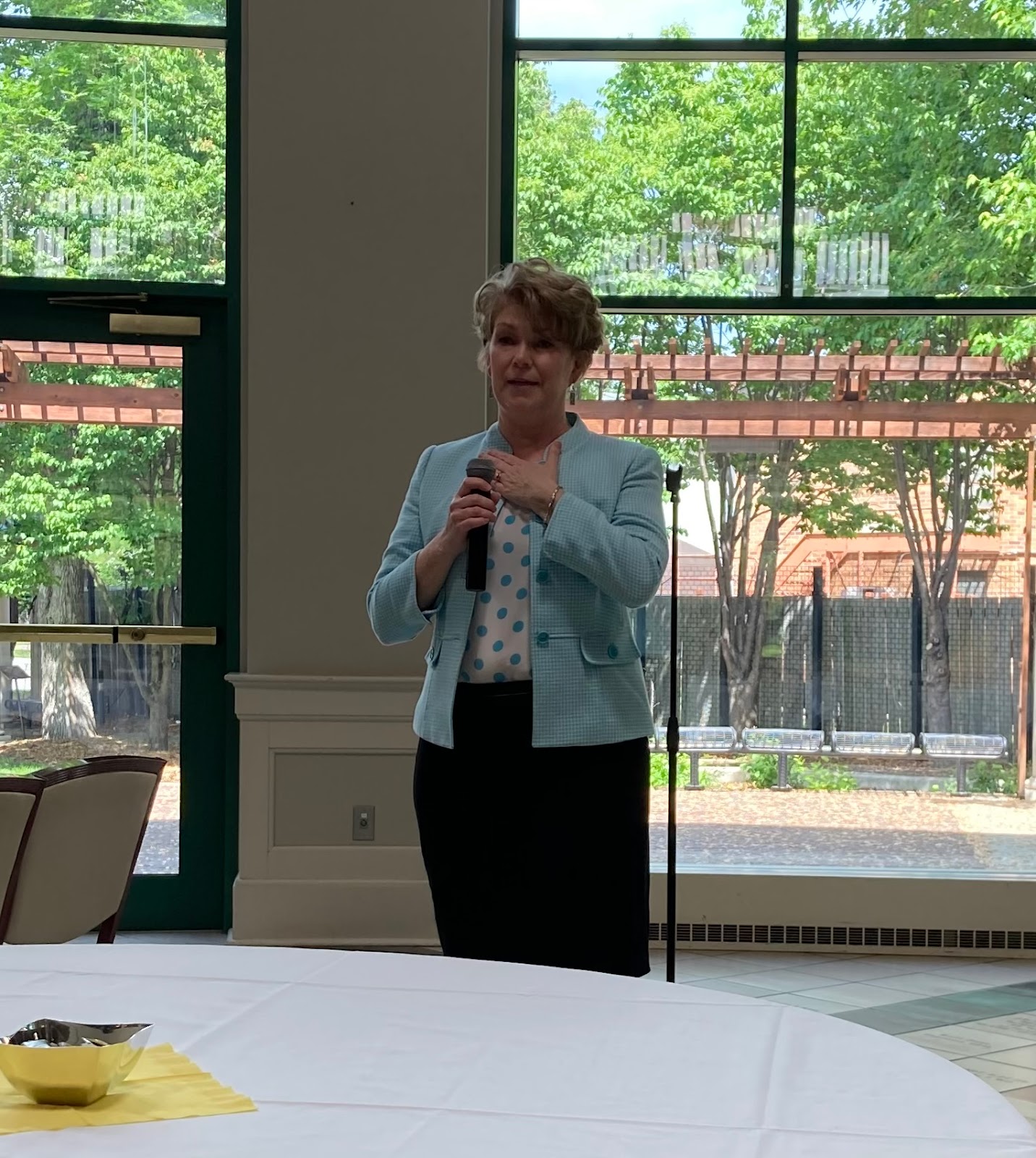
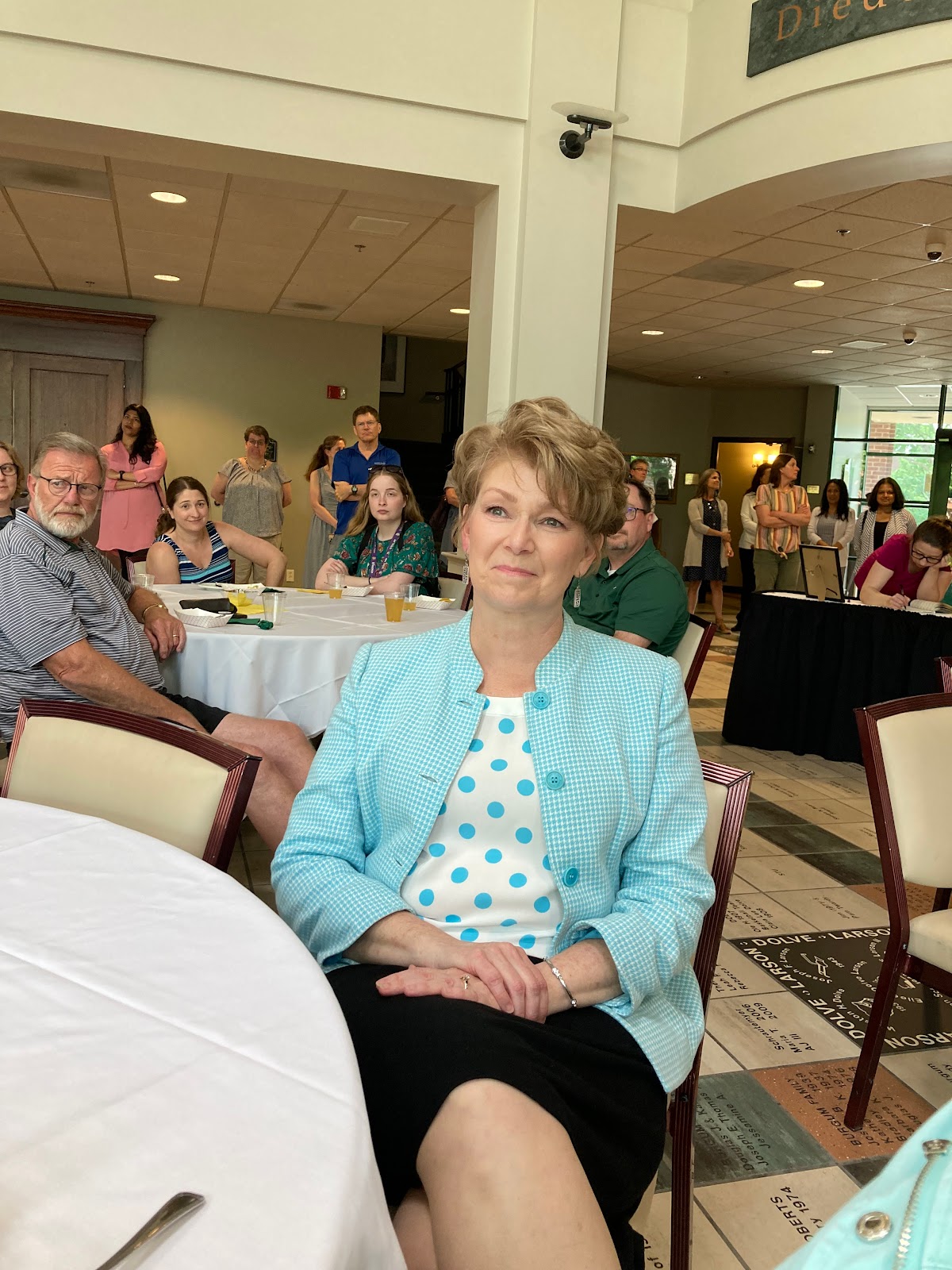
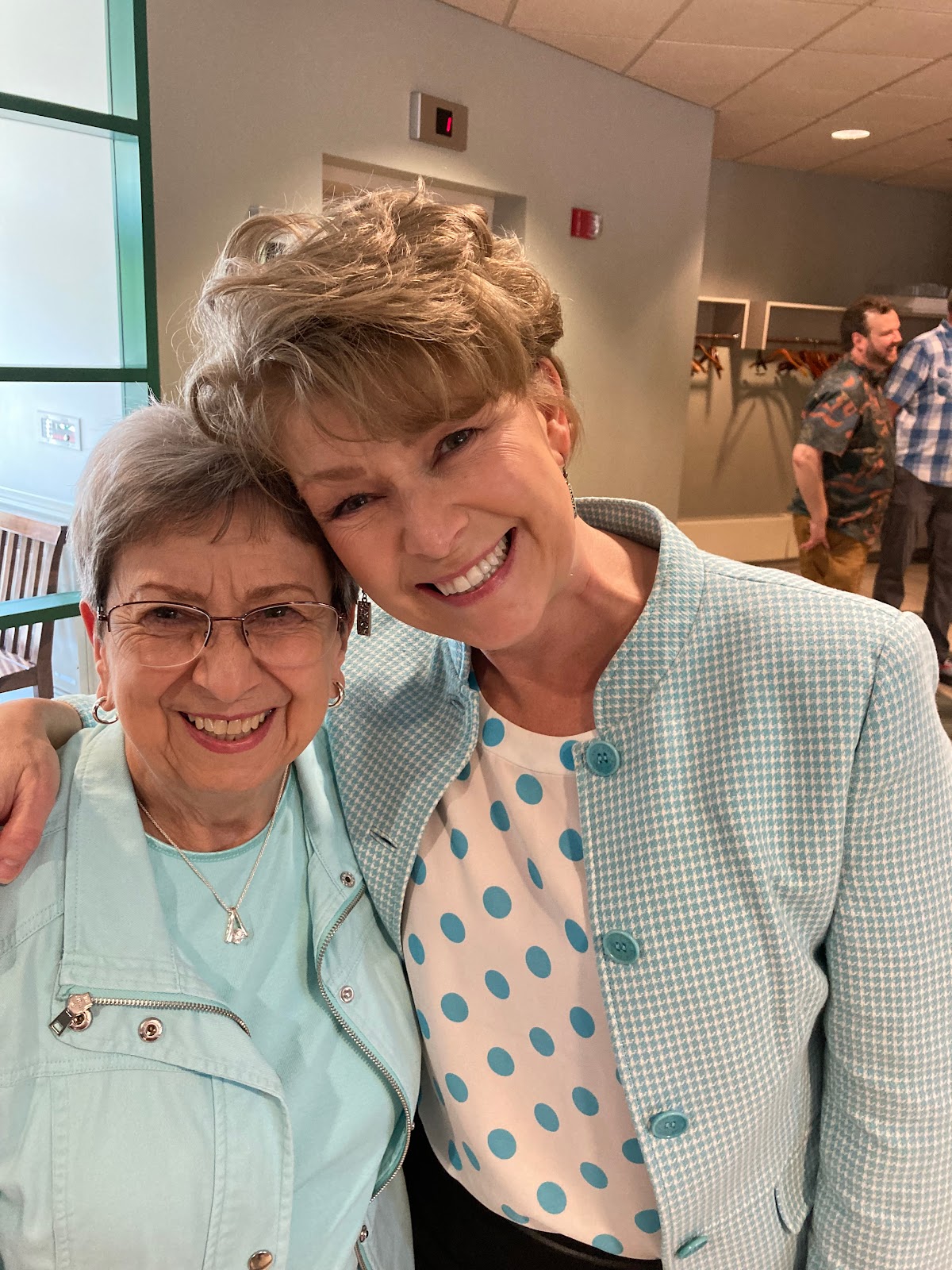
 We attended a farewell reception for Jane Schuh today at NDSU. She has accepted a position at Kansas State University to lead agricultural research. This Sheldonite has done well in her education and work experience having held several responsible roles at NDSU. It's been gratifying to watch her success.


Tuesday, May 30, 2023

Thoughts from the Poetry Gathering in Medora

 SEVERAL TAKEAWAYS from the recent 37th Annual Cowboy Poetry Gathering in Medora. First of all, I make no claims about being a cowboy, a fact which does not exclude me from appreciating its wealth of stories. (Heck, I discovered Baxter Black was born in New York City and came to the West later.) I participated with several pieces dealing with shipping pens along  spur railroads; rattlesnakes; St. Elmo’s fire; and a recitation of That Ragged Old Flag (since it was the Memorial Day weekend.)


Six states were represented: South Dakota, Montana, Minnesota, Colorado, Nebraska, and North Dakota. Musicians and poets performed their original pieces or borrowed from others. Some of them were outstanding, such as John Lardinois, Brent Voigt, D.W. Groethe, Yvonne Hollenbeck, Merrill Piepkorn, Pegie Douglas, Bill Lowman, and more.


One lady, Jan Schiferl from Fordyce, Nebraska, wrote and sang a song about her great-grandmother from Denmark who came here thinking she could always return if she didn’t like it. Turns out she did want to return but ended up in the middle of a large sea of waving grass and felt trapped by two huge oceans which she could never cross again, that of the waving grass and the watery sea. The personal history coupled with a beautiful melody made for a great piece. I was able to find Jan’s CD in the Western Edge Bookstore in Medora.


My pieces seemed to be well received. Several commented about my poem about the cattle pens from where cattle would be loaded into cattle cars. One old-timer remembered when a herd of seven-year-old Hereford steers were rounded up north of Medora and driven to the pens in Medora for shipping. The one about rattlesnakes dealt with the time a local legislator, Dan Panko, tried getting funding for a bounty on rattlesnakes and had no luck. Not giving up he went to a wintry den to gather a box full of them, brought them into the legislature, and dumped them out on the floor. These lines got a chuckle from the audience, “And such a commotion you never saw/ As when those snakes began to thaw/ And crawl about in the warmth of the room.” Yes, he got his bounty.


We’re tired now, but wanted to jot a few thoughts. After a diet of $12 and $14 hamburgers, I thought the one for $1.69 at the Jamestown McDonald’s was as good. The grass was green and ranchers voiced thankfulness for the recent rain. It was in the Western Edge Bookstore I was again reminded of the sign Doug Ellison displays, “If you think you have it tough, read a history book.” When returning home, we ran into a couple from Valley City who were present at the gathering and try to attend every year. I’ll remember her, because she was one of those who spoke well of my “stuff.”


Monday, May 1, 2023

The Birth of Dakota

The following article was published in the April, 2023 issue of the Western Writers of America "Roundup" magazine. 


Wide Open, Red-Hot, and Mighty Interesting By Lynn Bueling

Frank Ziebach, editor of The Weekly Dakotian, glanced out the window of his print shop and witnessed a man crashing through the window of Robeart’s Saloon in Yankton, Dakota Territory. He saw the dazed victim rise and throw off the sash that hung around his neck, brush shards of glass from his clothing, while in the gaping window frame his burly assailant stood shouting, “That’s what you get for breaking your promise. If you want more of the same, git back in here!”

A surge of shouting and laughing men squeezed through the doorway and started toward the victim who pulled a small pistol from inside his coat and waved it in the air shouting “Keep back!” It was enough to discourage the jeering mob from coming closer while he ran from the scene.

Ziebach rushed out to gather some facts from the excited bystanders. He learned the victim was George Pinney who until recently had been serving as speaker of the house of the newly formed Dakota Territory. The strong arms belonged to Jim Somers, the sergeant at arms. What could have caused such a barbaric act?

***

The western lands beckoned settlers to come, but they met fierce resistance from the indigenous people who saw them as intruders. Soon their numbers increased to the point where the Indians recognized the futility of resisting and signed the Treaty of 1858 through which they ceded a huge area of what is now the eastern Dakotas.

When the door opened, land speculators walked through. Among the first to enter was J. B. S. Todd, who happened to be a cousin of Mrs. Lincoln. Todd had been a promoter of the treaty, and followed it up with a trip to Washington, DC to present a request for territorial status. He gained no traction, but when Lincoln became president, Todd returned, flaunting his relationship to the president’s wife, and found success. Congress passed the Organic Act. Through the process we learned Todd’s underlying ambition was to be named governor of the new territory.

President James Buchanan had cleared his desk on March 2, 1861, but before leaving signed the Organic Act to establish Dakota Territory. President Abraham Lincoln took office just two days later and found himself facing the impending Civil War. Needing to free himself from the work of establishing a functioning government in this new territory, he quickly named an acting governor, his friend Dr. William Jayne. Lincoln feared naming Todd governor would bring charges of nepotism. Besides Todd was a Democrat, a fact which would not mesh well with the party in power.

Jayne’s task was large, even needing to name a temporary capital city. He chose Yankton, knowing that when the legislators assembled, one of their jobs would be to choose an official capital site. That Yankton should win the seat of government on a permanent basis may have

been seen as a given in some quarters, but a rivalry developed with other towns vying for the honor, namely Vermillion and Bon Homme.

Dakota Territory experienced a stormy birth. When Governor Jayne arrived in Yankton on May 27, 1861, he found a dismal town with primitive amenities. Of necessity, his office consisted of a two-room cabin, the back room of which served as a bedroom that he had to share with Attorney General William E. Gleason. The attorney general soon discovered the pecking order since his daily duties included emptying the chamber pot.

In order to proceed Jayne ordered a census which accounted for about 2,400 residents. Jayne used the number to issue his first proclamation that divided the territory into judicial districts and assign judges for them. The roving Metis were hard to find for a count and the census takers didn’t bother to count Indians.

The first territorial legislature convened on March 17, 1862, consisting of nine councilmen and thirteen representatives. Starting with a clean slate, the representatives worked to fill it. Contentious discussions and arguments swirled around their selection of a permanent capital site. George Kingsbury stands as a reliable historian of the time and relates to us just how contentious it was.

When a group of legislators gathered to eat in the dining room of the Ash Hotel two argumentative councilmen loudly asserted their preferences and began fighting over the matter with J. W. Boyle promoting Vermillion and Enos Stutsman favoring Yankton. Kingsbury gave a blow by blow account of the affair. “Stutsman was crippled from birth but he was every inch a fighter and amply able to take care of himself if he could get his hands on an antagonist... Boyle seized the ketchup bottle and flung it at Stutsman’s head, narrowly missing him. ‘Stuts’ retaliated with a fusillade of tumblers, cups and the skeleton of a fowl that had contributed to the feast. The combatants then flung themselves forward across the table for a finish fight, which might have ended seriously had not friends interfered and led the enraged gentlemen out into the air by different exits and walked them around until their ardor for a fight had time to cool, which it did, and they soon after joined hands in token of forgiveness and forgetfulness.”

Some details regarding the occurrence at Robeart’s Saloon highlighted earlier can be added here. It was on April 5 of the session that speaker of the house George Pinney discovered consequences for reneging on a promise he’d made to support Yankton for territorial capital. When a candidate for the speakership he’d agreed to support Yankton so as to gain their votes. Then as speaker, for whatever reasons, he inserted Bon Homme in an amendment, lost, then inserted Vermillion in it. That action won the day, but the bill came up for reconsideration the next day which prompted Moses Armstrong to report “a little blood was shed, much whisky drank, a few eyes blackened, revolvers drawn, and some running done.”

As they deliberated, they charged Pinney as being a traitor and a liar. The sergeant at arms James Somers, having the reputation of a thug, offered to throw Pinney through the window. The panic-

stricken speaker appealed to Governor Jayne for protection who complied by sending several guardsmen. That act enraged the representatives to the point where Pinney thought better of his action and resigned. Later that day he found himself flying through a saloon window.

In the closing days of that first legislative session, a number of representatives sullied their reputations with an inglorious episode on main street. Recorded history tells us the men celebrated for three nights before wrapping up business and going back to their homes. Campfires burned all night around which they gathered drinking, singing, and speech-making. Armstrong made note of observing the remarkable sight of two legislators holding a kicking cow by the horns with a third one stretching out its tail. Two more, one on each side of the animal, sat with buckets in hand trying to squeeze milk from the non-lactating heifer. Another man lay on the ground convulsed with laughter at the futility of effort and one silver-tongued lawmaker, J. W. Boyle, who afterward went on to become a justice of the Supreme Court, stood looking in the animal’s eyes pleading with it to give milk.

Known as the Pony Congress, this group of legislators accomplished the passage of 91 laws that served as the foundation for the new territory. James Somers moved on and was shot and killed in a dispute near Chamberlain. Yankton became the bona fide capital and Vermillion received a consolation prize of what has developed into the University of South Dakota. The promised state penitentiary for Bon Homme never materialized.

Dakota Territory existed as a self-governing body for 28 years until November 2, 1889, when it split simultaneously into North and South Dakota. Rowdy as they were, the first gathering of legislators in Yankton established the foundation for the territory to function. Historical accounts penned by George Kingsbury, Moses Armstrong, and Doane Robinson permit today’s readers to know something of its beginning, a beginning that Armstrong termed, “wide open, red-hot and mighty interesting.”

Wednesday, April 26, 2023

The Three Amigos


Craziest thing. I posted this picture on Facebook (Sheldon - Remembering...) and got a lot of likes. L-R -- Ralph Bartholomay, Dennis Bjugstad, and me, Lynn Bueling.

I Hunger for Lefse

  There is nothing profound here… Fresh lefse brings me on the run Some like it with sugar and cinnamon I like thick butter smear Just watch...