Sunday, August 20, 2023

The Railroad Reaches Ransom County

 The Railroad Reaches Ransom County

I never received an invitation to the party celebrating the Fargo & Southwestern Railroad’s arrival 140 years ago. Probably nobody remembered. Nevertheless we recall the time when the rails reached Sheldon on November 4, 1882, and Lisbon on December 2, 1882. The Fargo Argus reported, “All is commotion, excitement and enthusiasm...in Lisbon because the railroad has arrived. To estimate the importance, the value and the influence that will be exerted on our country by the road that touches us today is beyond our limited power.”

The state historical society has published a journal account of a land examiner named Thomas Sadler Roberts who rode the train into Ransom County in June, 1883. His job was to establish value on land grants received by the Northern Pacific from the U. S. government. The NP needed to begin selling acreage to raise money to cover construction costs as well as to profit from freight hauling.

We get a glimpse of life through Sadler’s eyes as he rode along looking out the train window. He observed, “The only station on the road of any account is Sheldon where there are about 25 buildings large and small including a good R.R. station and elevator.”

Later he wrote, “We reached Lisbon about 2 P.M. It is a little town of some 250 buildings scattered over a low plain on the west side of the Sheyenne River... The buildings are all new.”

Given the starting point in Fargo, the straight line distance to Lisbon is about 52 miles. My 1889 map of North Dakota shows the route with a couple minor bends that adds extra, so let’s call it 60 miles. Since reading a book about timber harvest titled When Money Grew on Trees I’ve become aware of the manpower and raw materials needed to lay a bed of rails on this branch line. The sub-title of that book reveals something of the book’s intent: A. B. Hammond and the Age of the Timber Baron.

Hammond’s operation was based in Montana, Idaho, and Washington. He saw the huge potential profits in furnishing raw material for building the Great Northern RR. He was no environmentalist with thoughts given to the ecology of the land. Hammond has become known for his poaching of federal timber and his anti-union efforts during the early 20th century. Slowly but surely state and federal laws were enacted to prevent unfettered logging.

Rail ties are heavy. I found a recent ad offering used ties for sale measuring 7” x 9” x 8’. How many can be cut from one tree? If the standard spacing is 19” on center, it takes about 3,250 ties per mile. I didn’t do the math to verify that figure, but if correct, that means it takes 195,000 ties to stretch from Fargo to Lisbon. Those old growth forests yielded heavily to furnish demand. Add other wood necessary for engine fuel, bridges, water tanks, freight and passenger cars, depots, growth of towns, etc. Progress came at a cost.

In our farm shop we had a long-handled hammer with a slim head about 12 inches long that I’ve learned was a spike maul. It was shaped that way to allow the user to drive spikes on the opposite side of a rail without breaking the handle. Here is how the Time-Life book titled The Railroaders describes the maul in action. “Five men to the 500 pound rail, 30 spikes to the rail, three blows to the spike, two pairs of rails to the minute, 400 rails to the mile.”

Labor requirements were great. We don’t know who these gandy dancers were that built the first track in the county. We know Chinese, Irish, and blacks worked in different areas of the country, often staying grouped together by their ethnicity. From what I’ve found, I believe the laborers here were Italians. Newspapers in the day did not follow any notion of political correctness since they identified them as “dagoes.”

Maintenance work was necessary and articles in The Progress noted in 1909: “A gang of swarthy sons of Italy have been assisting the regular section crew putting in new ties for the past two weeks. They will be here all summer, for after the ties are all in they will be employed in leveling track and other section work, so that by fall this portion of the road, at least, will be in first class condition.”

In another issue, “Section foreman John Caine went to Leonard Monday to supervise the laying of new steel rails on the Southwestern. He has a crew of sixty Dagoes ...The new rails are 72 pounders and will be a great improvement over the 56 pound rails that have been in use.”

Trains furnished a variety of services. One church saved souls in 1883 with a traveling chapel that parked in Sheldon at least twice that summer. Lumber arrived by the carload to feed building construction. A. H. Laughlin gave us a firsthand account of the gold rush when he wrote, “Within a week every incoming train was crowded with gold seekers. I counted 130 men coming from one train.”

As a student of frontier days, I paused to consider this news item. A businessman in Sheldon reported in 1886 that barbed wire sold off so fast that he quickly ordered a second carload. We presume open range existed here at the time, a fact that soon changed to fenced pastures barbed wire became available.

Once the trains arrived this area rapidly developed. Those of us called seniors might remember the smoke, the steam, and the whistle’s scream coming from the old-time engines.

Friday, July 28, 2023

OPPENHEIMER, THE MOVIe

There seems to be this big bubble of greatness surrounding Oppenheimer, the movie, but I’m   about to break it by saying I’m glad I read AMERICAN PROMETHEUS, the book first. Why go against this flow of “greatness” we’re hearing over and over again? Because I wouldn’t have known much of what was going on otherwise. And that was my wife’s reaction. She hadn’t read it.


The volume was turned up way too loud. I plugged my ears in some places. Taking a potty break halfway into the movie, I ran into the theater manager in the hallway and remarked that it was too loud. He said that’s Christopher Nolan (the director) for you. He makes them that way. Enough bitching. 


The storyline hinges on two overarching concerns of the scientists and politicians involved with the development of the atomic bomb. Number one - we’ve got to successfully develop it before Nazi Germany does, and two - we don’t want to share any secrets with Russia, our ally at the time. 


In Oppenheimer’s earlier life, in the 1930s, he’d flirted with the communist philosophy along with many of his friends and acquaintances. He never did become fully involved and foreswore any allegiance to it. This early casual relationship to it haunted his professional career the rest of his life.


To cut to the meat of the story, Oppenheimer received the appointment to make it happen and found an ally in the tough army general tapped to oversee the work. He chose the desert around Los Alamos, New Mexico for the headquarters to develop the theory into a working bomb. From nothing, the town grew by a few thousand in a short time and a massive construction effort soon built the buildings necessary for the work.


I wanted to see more of the theoretical side of quantum mechanics incorporated into the movie, but that never happened. As a college student he leaned towards chemistry but soon found he despised laboratory work. A bit clumsy, he didn’t do well as an experimental physicist, and as the book states, “wisely turned to the abstractions of theoretical physics.” He excelled and became recognized for it which led to his success.


Jealousies did him in and after the bomb dropped on Japanese cities he seemed to be counted as unnecessary. The government seemed bent on sifting communists out of positions of power, and Oppenheimer found himself denied further security clearance. 


The movie is worthwhile, but the book more so. My little brain never did grasp the concept of quantum mechanics; it was always something I wanted to learn; I didn’t find it here. Please don’t let my sour grape take on the movie stop you from attending. Maybe I stand alone in my thoughts about it.

Tuesday, July 25, 2023

G-Rs still in mind

 With the Germans from Russia convention still in mind, I think of Grandma Bueling’s history and her journey to the United States. Still a very young lady, she traveled with her family to escape the harsh life. According to the ship’s manifest, the family arrived with $11 and luggage. The dollar amount is very similar to that of many other families who had to use most of their funds for travel expenses. Couple the shortage of money with the language barrier and you’d have a hardscrabble life until you could become established somewhere. Eventually they made their way to the Sheldon area where she met up with her husband, a full-blooded Swede. They built a nice farmstead and they were able to live out their lives in relative security. But true to form, Grandma never talked about her experiences much. We’ve learned the reticence she exhibited was common among other German immigrants. They’d learned not to say much for fear of being overheard and sent to the labor camps in Siberia. 


At the convention one presenter told of how adamant her father was to not speak of the past for fear of Stalin. He’d become separated from his wife and two children in the old country, so he made his way to the U.S., remarried, and started a new family. He would never speak of past life, that is until he lay on his deathbed. He called his children in and told them of his previous life. Given this information, a couple of his now-grown children began a search to see if they could find their half-siblings. They found success after much work and luck and could re-unite as a whole family. It was only when on his deathbed did he open up. Before that he would become angry for anyone asking. He feared harm could find him or his family. 


American Prometheus

 We don’t go to many movies, but we will go to “Oppenheimer.” I’m wading through AMERICAN PROMETHEUS now but will not have it read by Thursday when we plan to go.  Born in 1942, I don’t remember that first bomb explosion, but there was a spate of atomic tests I do remember as I grew older. I’ll probably have something to say about it on Friday. 


Monday, July 24, 2023

The GRHS 52nd Annual Int'l Convention

 July 19-22, 2023, Mandan, ND


All ethnic groups must have gone through difficulties at one time or another during their historical existence. That is certainly true of the Germans from Russia  who have formed themselves into an organization to keep memories. One of the sessions I attended revealed to me a powerful story that centered on a fellow who’d stepped on my foot the day before. The discussion turned to the Displaced Persons Act signed by President Truman in 1948. The man was included in that category and as a young boy participated in one of the long treks to reach safety and thus was able to come to the United States under that act. I asked him later if he remembered much of it and he replied, “I remember everything.” Then, stupidly, I asked how many days did it take. He answered somewhat irritatedly, “Days? Weeks! Months!” 


The author Mark Sullivan has written a book, THE LAST GREEN VALLEY, that tells the story of that family’s flight from the advancing Russian army and the unknown future it would bring as World War II drew to a close. I was reminded of a veterinarian in Enderlin who was a DP. The young boy I was can still hear him telling Dad in his heavily accented voice to pronounce his name Ma-hi-look.


On the day before the convention we took advantage of the opportunity to do a bus tour Fort Yates with several points between. There are only a half dozen four star admirals in our navy and before we departed one of them came on board to talk about his connection to Germans from Russia. A native North Dakotan Admiral Stuart Munsch is based in Italy as the commander of our naval forces in Europe and Africa. Why he was there I’m not sure, but he soon departed with  several naval aides in their crisp whites tending to him. I’m sure he was being kept apprised of the situation around the Crimea.


We toured the Catholic church in Fort Yates which features much from Indian folklore incorporated in its building. Behind the church we walked through the cemetery which surprisingly held many Germans from Russia graves with iron crosses. 


One of the presenters talked of how hidden stories have a tendency to “bubble up” with the passing of time. The dark past remains unknown until researchers uncover hidden first families caused by war or political affairs. Only then could unknown half-siblings unite. Some refused to talk of their past for fear Stalin could still could have reached out to them. Real fear existed.


A sampling of sessions includes the following: Anti-German Hysteria in South Dakota in WWI, Tracing the Migration of German Colonists to South Russia, The Holodomor in Ukraine, Preserving Documents and Photographs, DNA and Genealogy, Knoefla Soup, Strudla and Kraut, How to Make “Red Eye”, plus a couple dozen more I won’t name. We eat lots of kuchen, too.


The turnout this year was large and came from several different states and Canadian provinces. Essay contests, family history research and books contests, silent auction, and good food can be found there. We always come away with ideas of pursuing our own family histories more deeply and already look forward to next year.


Monday, June 19, 2023

My Dan Panko Poem at Medora


  • I wrote and presented this poem at the Medora Cowboy Poetry Gathering on Memorial Day weekend in 2023. Mary knew this man, he'd drive into her folks' yard to sit and visit and the event featured in the poem really happened.


 Dan Panko aka Rattkesnake Dan


This happened, my friends, I swear it’s so

‘bout that time when Dan Panko,


thought his colleagues were insensitive


about not passing a bounty

he’d proclaimed so loudly


that deadly danger dictates

bounties should be paid on rattlesnakes.


He lived south of town ‘mongst the hills

where dens of rattlers send chills.


The only way you could dilute

the danger lurking in those buttes


was pass a bounty, but they wouldn’t budge.

As for Panko we’ll see they misjudged … >


the resolve he brought to this debate.

He knew he must create


a scene to change each mind,

cuz up til now they’d been blind.


They wouldn’t let loose of the cash,… 

the answer came to him in a flash!


He went home and found a crate -

thinking, you boys in Bismarck, just wait!


He carried the crate to the devil’s lair

and stuffed stiff, cold snakes in there.


Then back to Bismarck for another session

where he hoped to gain concession.


He dumped them out on the floor,

… there’s something they couldn’t ignore,


And such a commotion you never saw

as when those snakes began to thaw…


and crawl about in the warmth of the room,

set free from their wintry tomb.


Some people screamed, everyone scattered

as if to say their lives mattered.


Panko, put them back in the box!

Yes, let’s sit down and have some talks


about your long sought after bounty.

You’ve so profoundly


made your  point about paying a fee.

You’ve convinced us, we’ll agree.


Well, there’s the story of how Dan battled.

One headline stated, “Legislators are rattled.”


Panko even wrote a book,

explaining the measures that he took … >


to convince each and every man,

that he’d earned the name, Rattlesnake Dan.


Thursday, June 1, 2023

Jane Schuh to Kansas State

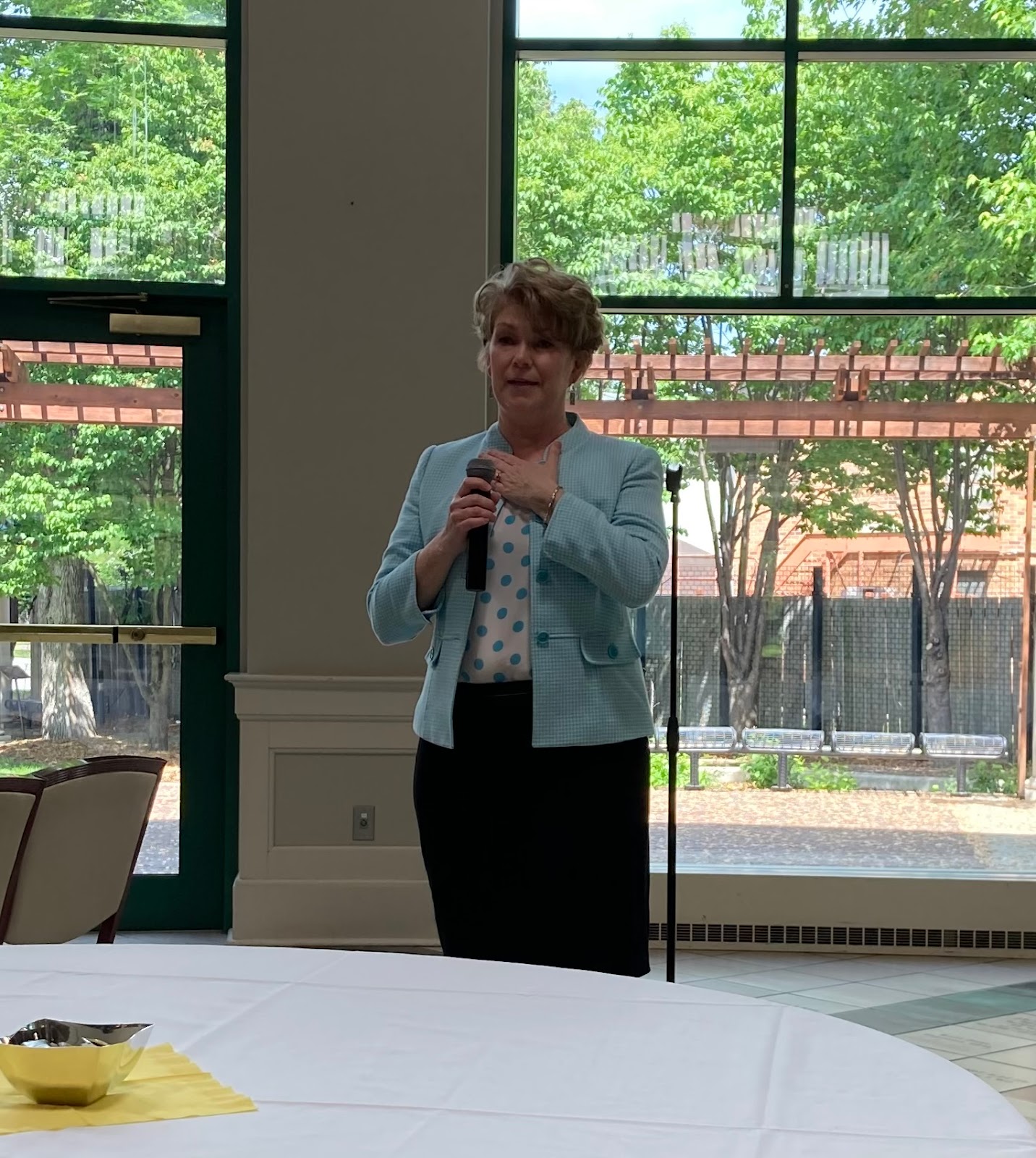
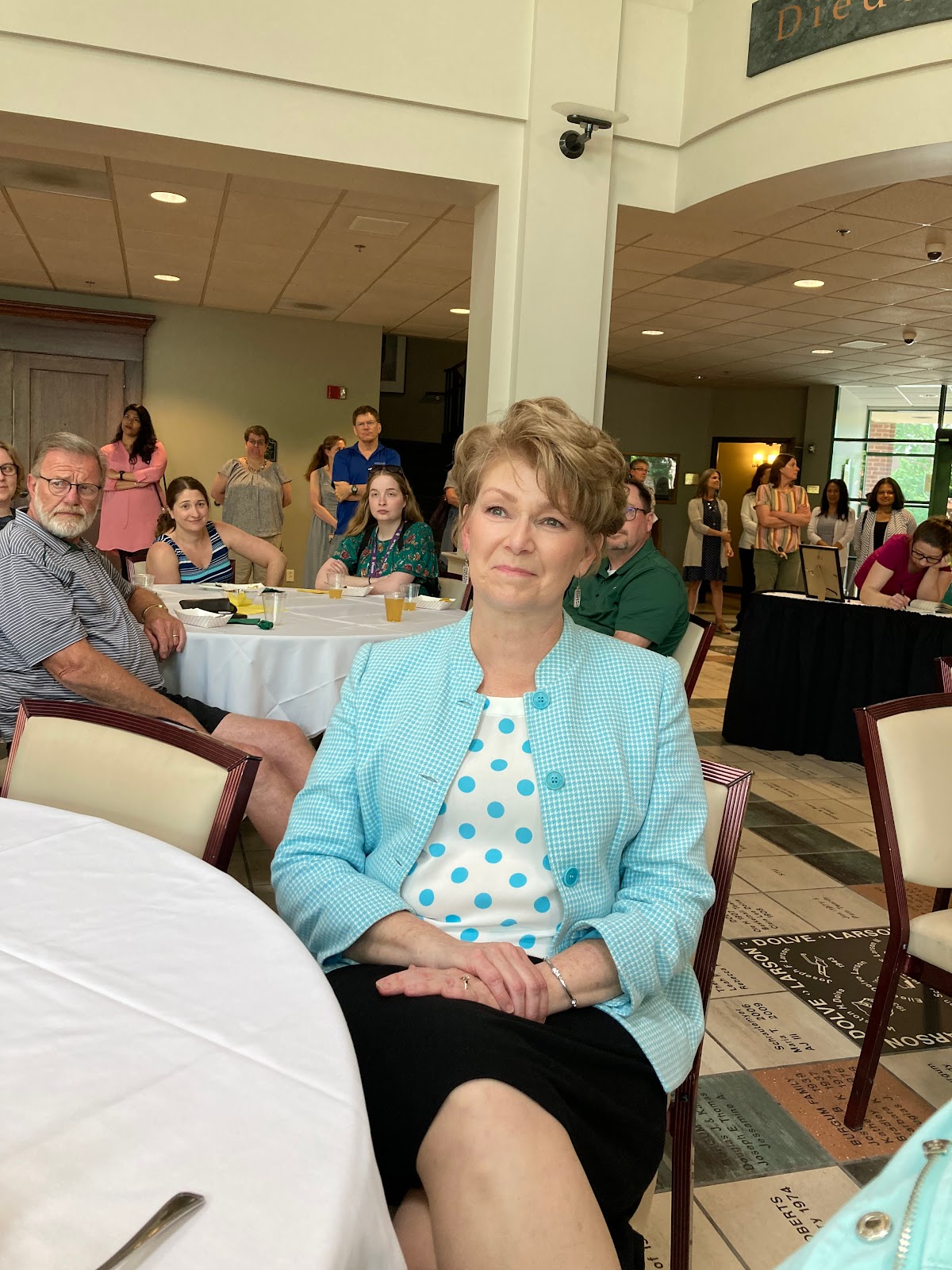
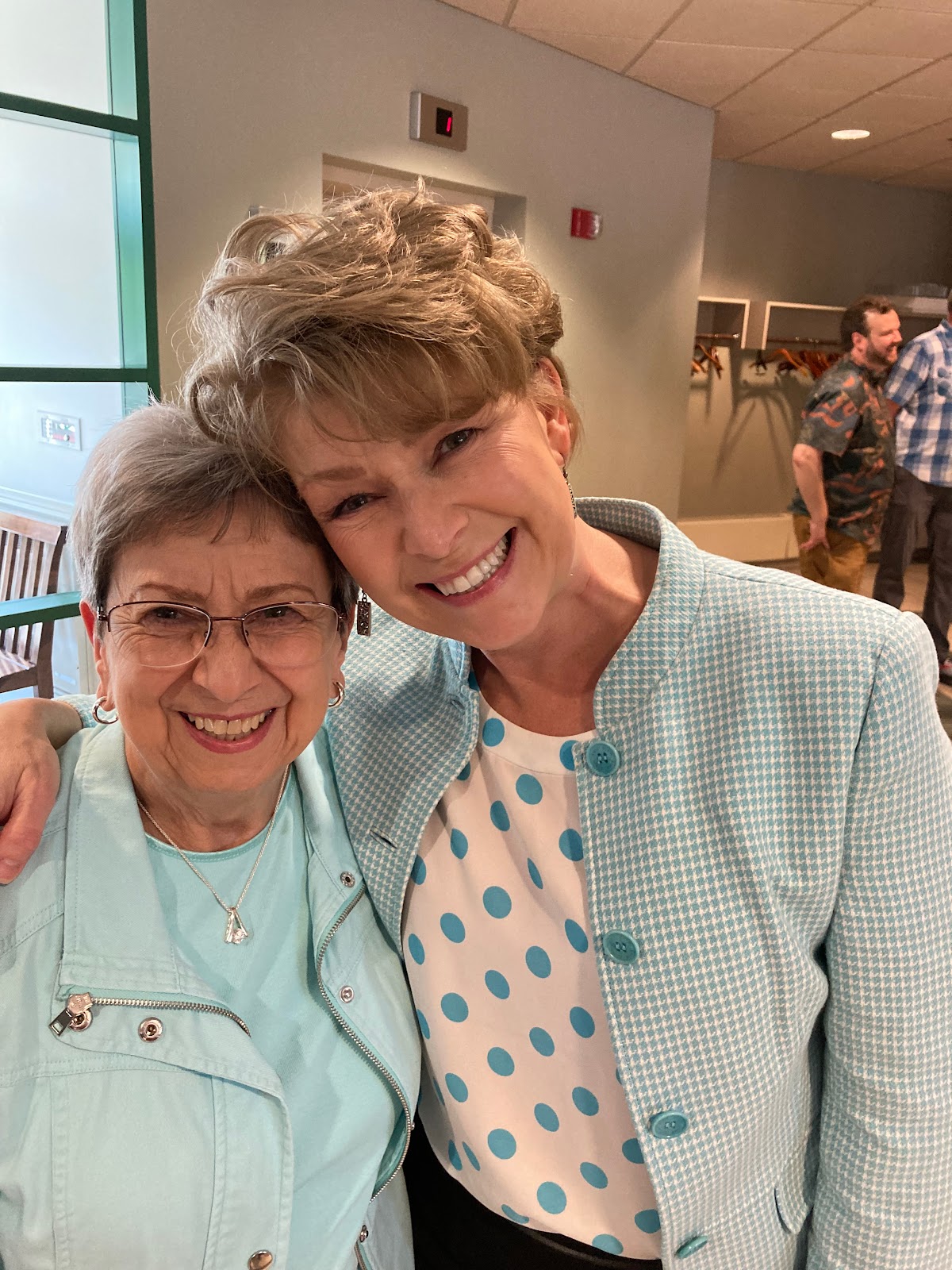
 We attended a farewell reception for Jane Schuh today at NDSU. She has accepted a position at Kansas State University to lead agricultural research. This Sheldonite has done well in her education and work experience having held several responsible roles at NDSU. It's been gratifying to watch her success.


RANDOM THOUGHTS - Friday, August 7, 2026

Random thoughts swirl about … A scribbler at the Forum wrote “put the dirt back in the hole” after the fund raising debacle stalled construc...