Friday, April 29, 2022

Disorderly Conduct

 The pages of the local newspaper often carried news of some lawbreaker causing a ruckus around town and getting arrested. It seems as though the city always employed a policeman, and we know a jail was available to accommodate them if necessary. The city hadn’t been tamed yet from its days as a frontier town.


March 6, 1913 - Winfield Scott was arrested Sunday afternoon by Marshal Dworschak on a complaint sworn by the village president. The charges preferred against him were disorderly conduct, carrying concealed weapons, and the discharging of firearms within the village. The whole fracas rose out of the tapping of a keg of beer in the bunk house near the stock yards Sunday morning, and by afternoon Scotty became hilarious (i.e. drunk) and started in to shoot up the town. He put twelve bullet holes through the pool room doors which caused his arrest. Monday afternoon States Attorney Meade came up from Lisbon and he was arraigned before Justice R. E. Kratt and pleaded guilty to all three charges, and was fined $20 and costs, amounting in all to $35.65. Ben Warner, who was also implicated in the affair, was also arrested on complaint of the village president for violating village ordinance No. 9, that of collecting people for the purpose of drinking intoxicating liquors. He pleaded not guilty to the charge, but the evidence furnished, proved his guilt, and he was fined $10 and costs amounting to $20.10.

Monday, April 25, 2022

Making History: The Storytellers...

 A very recent book review by Douglas Brinkley appearing in The Washington Post caught my eye.  The book  - Richard Cohen’s Making History: The Storytellers Who Shaped the Past - had just been stocked at our local Barnes and Noble; I purchased my copy and began reading eagerly. The author’s contends that when all things considered for historical accuracy and objectivity are applied to a work, it still will reflect “the manner of the author.”   

Cohen takes a wide look at historians who have told us how things were at the time of their happening. He doesn’t neglect to mention such non-historians as William Shakespeare who probably has formed more people’s ideas of the past than other writers of history. He considers the accuracy of New Testament Bible authors, Matthew, Mark, Luke, John, and tells us of such historians as Herodotus and Thucsydides.


He speaks a lot about Winston Churchill who he say was not a historian but a participant recorder, persuasive and widely read. Cohen mentions Churchill’s standing among today’s school children who in a survey thought he was a fictional character, but Sherlock Holmes was historical. Teachers of history obviously have some work to do.


Historians like John Keegan, Doris Kearns Goodwin, Barbara Tuchman get high marks from Cohen. Keegan rates an especially strong section in the book supporting and appreciating his style of research and writing. As a presidential biographer he gives Ulysses S. Grant the highest mark. To be honest, I still have reading to do in this volume, but it is the kind of literature I find interesting and thought-provoking. To wit, note the eggs at the side of the book which we hope will soon hatch with new ideas.


I am on Clay Jenkinson’s mailing list and thought his email today spoke very closely to the subject of Cohen’s book. For the magazine he edits called “Governing” he interviewed a historian Garrett Graff who wrote about the Watergate scandal that brought Nixon down. As it stated, “A new history of the scandal claims that famous original reportage was too narrow and missed a ‘weirder, zanier, bigger, and different’ story.” Interesting stuff. Woodward and Bernstein didn’t quite get it all, I guess. And that’s the way with history. New information keeps surfacing and it keeps getting rewritten. I will read on.


Sunday, April 24, 2022

Strange Things Done in the Midnight Sun


(Five years ago the following article was published in The Roundup magazine. When I looked at it again, I thought it might interest readers today in this newspaper.)


The auctioneer cried, “Sold, $20!” With a rap of his gavel I owned The Spoilers, a book written in 1905 by Rex Beach. A thinly disguised novel about the North Dakotan Alexander McKenzie. The Spoilers moved into bestseller status the following year. Why was Beach compelled to think the story surrounding this man during the Alaskan Gold Rush was worthy of his attention?


In the beginning, the real-life McKenzie had worked as a bullwhacker and a railroad laborer working westward. Landing at Bismarck, the end of the track for several years, he joined a Hell on Wheels community “crowded with Indian fighting soldiers, ‘bad men’ from down river and railroad gangs from the east.” His doorway into a political career opened in December 1874 after the county sheriff, along with a deputy U.S. marshal, fell through the ice on the Missouri River and drowned. 


To replace the sheriff, the county commissioners turned to the physically imposing McKenzie to quell unbridled crime in what The Bismarck Tribune called the “Wickedist City in the West.” After his appointment, he was elected to the post six more times.


McKenzie made friends and alliances during his lawman tenure, including Clement Lounsberry, publisher of the Tribune. Lounsberry blessed McKenzie’s work in 1877 saying, “Few criminals escape detection when McKenzie gets on their track.” Working with and on behalf of the Northern Pacific Railroad gave him a powerful platform. Prior to statehood in 1889, he deceitfully engineered the removal of Dakota Territory’s capital from Yankton to Bismarck because the railroad planned to go through Bismarck.


If the old maxim is true that absolute power corrupts absolutely, then he can be fairly judged corrupt. Of the state’s first eight governors, only one was not handpicked by the growing McKenzie machine.


The stage in North Dakota wasn’t big enough for the Boss and his imaginative character. The Alaskan Gold Rush drew him like a magnet northward. Not inclined to dirty his hands digging for gold, he took the tack of calling on his connections in Washington, D.C. to appoint his handpicked choice of Arthur H. Noyes as a district judge. Timid and pliable, Noyes could be easily convinced to back McKenzie’s scheming.


They focused wolfish attention on rich lodes developed by Norwegian and Swedish miners after the question arose: Should non-citizens have rights to ownership? Noyes placed them into receivership until “legal” claim could be decided. Of course, the receiver happened to be McKenzie, who banned the rightful owners from setting foot on their claims, then hired workers to mine the gold and hide it.


Enter Rex Beach. Like thousands of others, he had also sought riches in the gold fields at Nome. He failed at prospecting but succeeded in spinning gold when he wrote The Spoilers. Beach recreated McKenzie as a character with a similar-sounding name - Alexander McNamara - while remaining fairly close to the actual storyline. The story caught the attention of the reading public, becoming a best-selling novel in 1906 and attracting filmmakers in a big way. Hollywood filmed it in 1914, 1923, 1930, 1942, and 1955.


It would be difficult to compare the movies one to the other, but the 1942 version starred Marlene Dietrich, Randolph Scott, John Wayne, Harry Carey - and even poet Robert W. Service, who played himself in a bit part.


Scott, who usually played Western heroes, acts the part of the antagonist McNamara. Wayne, the good guy, rises in opposition to McNamara and consorts with dance hall girl Dietrich. The movie features arguably one of the best fight scenes ever filmed, lasting more than six minutes before the knockout punch lands. Thirty stuntmen took 10 days to choreograph the saloon’s destruction.


James Michener’s novel Alaska includes the McKenzie story in Chapter Nine, The Golden Beaches of Nome.” Furthermore, after viewing the 1960 movie North to Alaska several times, I’ve concluded there’s a good chance the screenwriters also took inspiration from McKenzie’s misdeeds.


A dependable telegraph system in Alaska was not completed until 1903, rendering communications with the outside world subject to the coming and going of seagoing crafts. That fact meant meant the aggrieved miners had a long wait between the time they could lodge their complaints with an honest judge in California and the final resolution, which did come in their favor. In the interval, complaints filed with Noyes went unheeded and the gold heist continued. The miners could only sit and watch them dig.


Finally, justice arrived when the U.S. Circuit Court of Appeals in San Francisco heard the case and determined McKenzie and his friends had refused to return the gold to its owners after being told to do so. It further ordered two deputy marshals to Nome to arrest him and bring him to the court in San Francisco. Found guilty, he began serving a one year sentence.


It paid McKenzie to have friends in high places, men like President William McKinley and railroad magnate James J. Hill. After only a few weeks of confinement,McKenzie began to feign declining health. Friends started applying pressure on McKinley to release McKenzie because his health started to suffer. The president said he had “never before been subjected to such tremendous pressure from influential men as he had been to pardon McKenzie.” McKinley relented and after three months McKenzie walked free. One observer witnessed him “sprinting” to catch the next train out of Oakland.

McKinley appointed a new judge, James Wickersham, to clean up the affair and return property to rightful owners. After studying the matter, Wickersham wrote that McKenzie’s “notorious criminal activities as head of the most flagrant prostitution of American courts known in our history, and his other offenses were all forgiven by the President’s pardon. He returned to North Dakota, where his health quickly recovered its normal condition, and continued in his activities as a leading citizen.”


The era of McKenzie’s influence in the state ended , however, with a strong grassroots progressive movement that turned him and his cronies out of power. He found the energy and the money to build in 1910 one monument to his memory, the McKenzie Hotel in Bismarck, now called the Patterson Hotel.


As much as he had become an offensive man in some quarters, he maintained a loyal following until his death. He received the only state funeral given a non-office holder in history. One further shock came when his will was read. It came to light that he had two separate families, each unknown to the other. Buried in Bismarck’s St. Mary’s Cemetery, his place of rest can easily be found at the largest monument in the cemetery. It casts a long shadow over his grave at sundown.
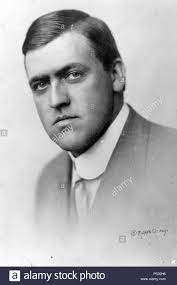
Rex Beach


Tuesday, April 19, 2022

Thoughts on my Last Days...

 The pages on my calendar keep on turning and this article just published in Roundup magazine attests to that. My association with the editor of this magazine has been great, but it's not over since I will keep submitting articles to him.


Friday, April 15, 2022

A Lot of Birds

 (Note before reading: People with a weak stomach shouldn’t read any further.)


     One of the area’s historians was a man named Fred Baguhn from the Owego area. I found this story in his papers archived at the State Historical Society.


     In 1876 the passenger pigeons roosted in number so great as to bend down the branches of the trees. Trappers took them in huge nets 59 feet wide and 100 to 300 feet long. Nets were placed on poles ten feet high and arranged to drop at the pull of a string. On a block of wood was placed a pigeon that had been blinded by sewing its eyelids together with a common sewing needle and thread. These were called “stool pigeons.”  


     The technique of this operation was to wait until a large flock of pigeons appeared, coming in the right direction to pass over the spot where the net was set, whereupon the stool pigeons that were perched on the stools would be thrown high into the air. Being unable to see, the birds would fly around in bewilderment until they could find their way to the ground. The incoming flock would thus see their kind flying about and alighting and would follow them to the ground. There would be a scattering of grain leading them to the net, and when a sufficient number of pigeons following this scattered grain to the net, had come under it, it would be sprung, and drop upon them. 


     Of course, their heads projected through the meshes. The trappers then, to avoid mutilation, got on their knees and ambled back and forth across the net picking up the birds and crushing their heads with their teeth. The birds were tied in small bundles for shipment to Chicago, Milwaukee, St. Paul, and Minneapolis. The two years of large flocks were 1877 and 1878. Early residents of Owego observed that they broke limbs from trees at Pigeon Point, and that with a lantern in the night, they could be clubbed from their perches by the bagful. 


     So if anyone wondered why this area is called Pigeon Point… and where the term “stool pigeons” comes from…

Col. McIlvain

 Col. William W. McIlvain

First Commandant of the North Dakota Soldiers Home


As was common in the early days of Dakota Territory, Civil War veterans looking to make a living in a new, undeveloped region came with the hope to establish themselves. Sheldon had its fair share of veterans, one of whom was Col. William W. McIlvain. He and his wife first settled in Fargo in 1883 while working as a special land agent for the United States government inspecting homesteaders’ claims.


His obituary in the Sheldon Progress of February 10, 1911 credited him with being instrumental with many pioneers successfully settling in the area. The future of farming appealed to him, so the next year in 1884, he and his wife settled on a farm two miles west of Sheldon. A couple of present day farmsteads come to mind where that might have been, but many sites from that day have disappeared, too. He developed the farm into an 800 acre operation, which in horsepower days was sizable. 


The origin of his title “colonel” couldn’t be found, and his only listed ranks found were corporal, sergeant, and 1st lieutenant.  At any rate he joined the 6th Michigan Infantry Regiment in the Union army and fought in some major battles. One of them was the Siege of Port Hudson. A Confederate soldier who had been inside wrote how hungry he and his fellows got. “We eat all the meat and bread in the fort…eat all the beef, all the mules, all the dogs, and all the rats around us.” The 6th Michigan regiment kept them surrounded and hungry for 48 days before they surrendered.


One other battle to mention was the Battle of Baton Rouge in which the Confederates attacked the Union-held capital of Louisiana. It took Union forces by surprise and forced then back until they came within range of Federal gunboats positioned in the Mississippi River. Cannons on the boats were able to provide covering fire and saved the day for Union forces.


While I was taught one shouldn’t speak ill of the dead, the following narrative is history and can’t be ignored. This Michigan unit’s discipline weakened and they defied orders at every opportunity. Around Baton Rouge, the unit engaged in profiteering and plundering and burning plantation buildings. Maybe it was to their saving grace that their bravery under fire that speaks well.


A small detachment of the 6th hadn’t fared well with casualties and when outnumbered in an attack, they answered with a bold counterattacking bayonet charge. In their disease-ridden swamp environment a lot of the men were forced to fight when very ill. What McIlvain’s role in any of the negative aspects of the army is not known, but if it was rampant, we can wonder if he resisted with a Golden Rule attitude. We don’t know.


We’ll return to his Ransom County years when he made his home in Sheldon, Enderlin, and Lisbon. While in Sheldon he became established as a farmer andalso engaged in a general merchandise business in Sheldon with his son, Frank. In older age he went to spend the winter with his daughter in Denver and died there on Feb. 1. 1911. It was in his obituary printed in The Rocky Mountain News that stated “He was prominent in the politics of the state (i.e. N.D.)” that a clue to his future success might point. Colonel McIlvain became the first commandant of the North Dakota Soldiers Home.


As his local obituary states “Colonel W. W. McIlvain was the first commandant of the Soldiers Home, which was ready for occupancy August 2, 1893. The many beautiful drives, walks and flower gardens are the result of his handiwork. He, together with his wife as matron, held this position for ten years, when they resigned and moved to Enderlin and purchased their present home where they have resided since.”

***


Baseball season has begun. Baseball stories are filled with statistics and other asides, so who should be talking about them other than a conservative newspaper columnist who writes about the political scene in Washington, George F. Will. His book titled Bunts is filled to the brim with baseball. How about the only pitcher in history whose first name contains all five vowels - Aurelio Lopez or the only pitcher whose last name contains all five vowels - Ed Figueroa.


Everybody loves laughing at Casey Stengel’s utterances. Here Will tells the story of Casey saying, “What about the shortstop Rizzuto who got nothing but daughters but throws out the left-handed hitters in the double play?” Huh?


Casey went on to manage the 1962 Mets when they lost 120 games in their first season. Who knows what he meant when he uttered, “They say you can’t do it, but sometimes that isn’t always true.”

Tuesday, April 12, 2022

Strange Things Done...

 (This popped up as a memory on my facebook page. It is one of my favorite stories.)


She Won Again

  AWARD WINNER, X 2 We attended the 50th Annual Family History Workshop yesterday at MSU in Moorhead and received quite a surprise. Mary rec...