Sunday, July 14, 2019

Importance of Reading

The importance of reading good nonfiction books which are backed by facts and filtered through the mind of clear-thinking writers becomes ever more obvious. A case in point jumped out of Robert A. Caro’s THE PASSAGE OF POWER, a biography about the life of Lyndon B. Johnson. While paging through it I came upon the passage dealing with the Cuban missile crisis.  JFK was president while LBJ stood by, mostly ignored as the vice president. As tensions increased, JFK’s advisors urged him to take military action, either bomb or invade. Caro says the President remembered reading Barbara Tuchman’s THE GUNS OF AUGUST and saw in her writing how miscalculations among European countries had exploded to cause the First World War. JFK was determined to avoid war and instead went with blockading Russian ships from reaching Cuba.
Robert Caro is writing this monumental biography of LBJ; the one referenced above is the fourth in a series of five. Presently he is writing the fifth and final volume. Our present leadership might find enlightenment in the lessons of history brought through books like JFK did.


Sunday, July 7, 2019

Reading About Ladies

I’m on a bit of a kick reading about ladies recently. I haven’t finished any of these three but read some in each one, then set it aside, pick up another, and read it for awhile. They represent a memoir, a biography, and an autobiography.
The memoir, EDUCATED, relates the author’s personal story of being raised in a home where the father would not enroll his children in public schools for fear of them being indoctrinated. Their mother could teach them only a little. Tara Westover began learning life lessons painfully about how to cope in society. She succeeded in getting an education in spite of it all and attended both Harvard and Cambridge University where she earned a Ph. D. in history. She still struggles with psychological wounds, but one thing - she certainly learned how to write.
Michelle Obama’s autobiography BECOMING shows that she knows how to write well, too. So often books like these two often use the expertise of a professional writer helping them write, but not these two. Mrs. Obama was born into a working class family who lived in crowded conditions in a two bedroom apartment in Chicago. Even with her humble beginnings she rose to graduate from Princeton University and followed with a law degree from Harvard Law School. We all know she became a gracious First Lady who outlines her life well in this volume.

The biography A WOMAN OF NO IMPORTANCE closely details the life of a lady spy in WWII. The spy - Virginia Hall - did not seem the spy type what with her being a female, wearing a prosthetic leg due to a teenage hunting accident, and having the persona of a working journalist reporting for American newspapers. Her handlers in England could hardly believe the success she was having establishing networks of resistance in France, blowing bridges, furnishing itching powder to prostitutes to sprinkle in Nazi uniforms. Whether or not she survived, I haven’t discovered yet.

Thursday, June 27, 2019

Old Time Photographs

We drove to Enderlin last week for the express purpose of viewing old pictures in their museum. A high school classmate and friend Susan Schlecht has been involved with that community’s effort in preserving items from the past and I knew she’d be helpful. As it turned out Myrene Peterson was on duty that day, but she called Susan who soon arrived and the four of us spent some enjoyable time together.
I wanted to see old pictures of my hometown of Sheldon that have been preserved and presented to the museum by a Sheldonite Tom Spiekermeier. Fortunately, he has devoted personal time and money to projects like this which benefit the history lovers among us. 
Above my desk I’ve hung a copy of one of the pictures he’s reproduced: a threshing crew and a threshing machine pulled by a steam tractor crossing a ford on the Sheyenne River south of Anselm. I always marvel at the quality of old-time photography and the sharp quality of its images. This one is no exception. The brand name of the steamer shows clearly to be a Buffalo-Pitts and is hitched to a Nichols and Shepard thresh machine. Behind stands a bundle wagon, and in the water on either side of the steamer is a horse and buggy and a water wagon. At least thirteen men appear in the scene. Another hazy form might be hidden in the smoke and steam from the engine.
The picture was taken in 1901 or some short years after. How would I know that? An article appeared in the Sheldon Enterprise newspaper of that year stated this information: “ July 19, 1901 - Fred Wall and brother Alfred have bought a fine new threshing outfit and will make the straw fly this fall.”
Another dated August 30, 1901 stated, “Last Friday was a damp day and made threshing a slow process, yet Fred Wall seems to have gotten there with both feet. He threshed on that day 2121 bushels of wheat, 90 bushels of oats, and 32 bushels of barley. The total time in the field was 11 hours and five moves were made during the day. The separator was a 40-60 Nichols and Shepard and a Pitts 22 H. P. engine.”


Wednesday, June 19, 2019

Sheep Shearing

On Memorial Day weekend we made our way westward on I-94 headed to Medora. Near Richardton a pickup pulling a flatbed trailer loaded with several filled wool sacks passed us. It had been a long time since I’d seen any filled bags and it brought back memories. Dad often kept a flock of sheep, fifty or so, and in the springtime he’d hire a shearer to clip their wool. We’d pen them the night before because Dad said if they were warm more of their lanolin would flow into the wool fibers making each fleece a bit heavier to sell by the pound. Of course, this meant mothers became separated from lambs which in turn caused a constant chorus of bleating sheep all night long. 
After the shearer set up his machine and signaled for the first ewe to be brought to him, the noise of his clattering shears added to the scene. Some of the shearers made their work look easy, but when I saw the sweat running from their faces, I knew they were working hard as they peeled the wool away like a robe. There’s where my job started. While Dad dragged another victim to the shearer, I’d reach down to scoop the fleece in my arms and wrap and tie it with paper twine and bind it into a manageable bundle. Now those eight-foot long burlap sacks found use.
Dad had pounded together a scaffold from which those long sacks were hung suspended. Each fleece was tossed into the opening at the top, but that wasn’t all, since I’d then get in there and tamp the wool down solidly. I’ll always remember how soaked with lanolin my shoes and jeans had become by the end of the day. It was a good leather preservative. 
It’s been a long time since I’ve done any work around sheep. We always liked those flocks of sheep that would furnish income twice each year: a wool crop and a lamb crop. And even now I see those lambs in the spring “cavorting” in the barnyard, playing, leaping, running with the joy of living.


Pictures are hard to come by, but we found one of Mary's grand-uncle packing wool

Monday, June 17, 2019

Memory of a Grain Elevator

I saw this picture of a grain elevator posted on a Facebook group page - North Dakota History of Cities, Towns, and Places.    It sits on the Runck farm south of Casselton and we'd pass it every time we went to Fargo.  When I was very young - 6 or 7 - I remember seeing it loaded up and rolling out of Sheldon.  That would've been about 70 years ago.


Picture by Edel Johnson

Tuesday, June 11, 2019

Butzen Melons


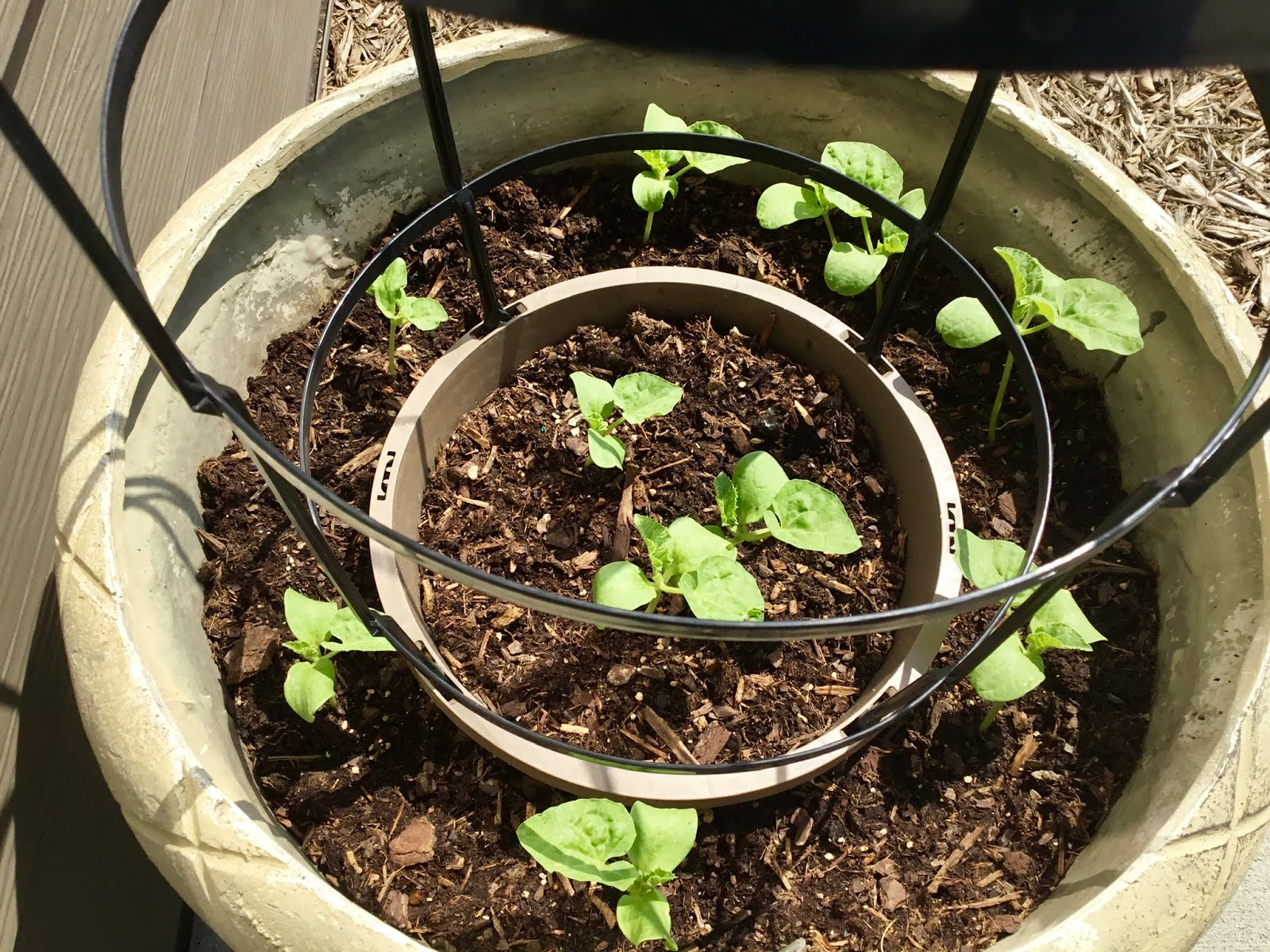
“Butzen Melons”  While attending the annual Germans from Russia convention last summer in Pierre, SD, my wife Mary attended one seminar dealing with heirloom seeds where the presenter promoted the preservation of genetic diversity for future generations.  She bought a small packet of cantaloupe seeds from him called “Butzen Melons.”  They came from Russia with one of the waves of immigrants and have not been genetically altered since.  They’re growing in a large pot on our patio but need thinning.  Son Brandon will take some to transplant in his garden.  

It brought to mind a memory from my childhood.  In my grandparent’s garage the exposed rafters held dozens of large nails on which I remember some cobs of corn were harpooned.  It took many years before I realized why they were there.  They were Grandpa’s corn driers, and after shelling, the kernels would be planted for another crop.

The words of the workshop presenter in Pierre started echoing when he said Monsanto has gained access to the seed bank where these seeds and others have been preserved.  He posited that who knows what will happen to the purity of the strain now.

The Sunday New York Times published an article which deals with just such a theme: “Save Our Food. Free the Seed.”  Its author states that four giant companies control more than 60% of all the world’s seed sales.  One chart illustrates a large number of private seed companies that existed just recently but by last year had all been purchased by Monsanto.  In return Monsanto was in turn acquired by the German conglomerate Bayer making it the world’s largest agrochemical and seed company.  Three other major players are Corteva, ChemChina, and BASF.  Altogether they control most of the seed business in the world.

The author of the Times article, a chef, lamented the loss of biodiversity of vegetables, grains, and fruits and how flavors have suffered.  For instance a carrot raised in Oregon isn’t any different from one raised in Florida.  To complicate the whole affair “utility patents” are allowed and the large companies can claim exclusivity of seed varieties.  Furthermore, these huge companies control the chemical industry and therefore can develop chemicals that work with “their” seeds.


A movement toward organic food offers options for today.  “The food culture is experiencing a tectonic shift as the rebellious stakeholders of our modern food movement — farmers, independent retailers, nutritionists, educators, chefs and ever-more-informed eaters — upend the marketplace.”  Somehow I think there should be room for that concept to flourish beside the giant seed companies.

Sunday, June 9, 2019

Our 45th Wedding Anniversary

I married this Beauty 45 years ago - June 8, 1974. It's still good!!!  The wedding was at a church called St. Gertrude's which is south of Raleigh ND.  It was a nice day and we enjoyed the "redeye" that Mary's dad concocted.  It packed a wallop that many of the people from my hometown had never sampled before.  It loosened them up.


RANDOM THOUGHTS - Friday, August 7, 2026

Random thoughts swirl about … A scribbler at the Forum wrote “put the dirt back in the hole” after the fund raising debacle stalled construc...